Showing posts with label Concepts. Show all posts

Thursday, 17 November 2011

Specific Point of interest

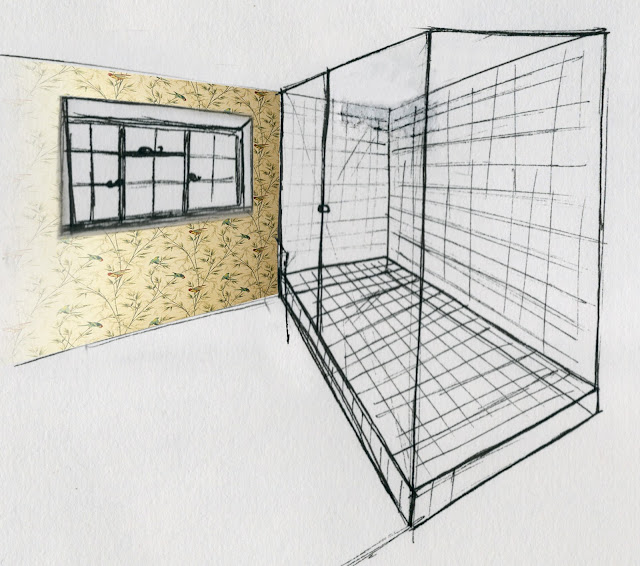
The shower in the en-suite bath room is to be made bespoke to fit the width of the room.  Below are detailed drawings of this area and what it should look like.

A low wall either side of the door will provide a shelf on the inside of the shower, and will be made from wood.  Glass panels will then be fitted and sealed above the wall to form part of the screen.  The image below gives an example of the type of glass I will be using here.  Continuous with the theme, this reflects the natural surroundings, and in particular the wild flower garden.

(Ebcu, n.d.)


The door will be made from clear glass, and sit centrally to the shower.  The tiles I have chosen are from La Fabricca S.p.a, and reflect the wild garden, with flowers that look as though they are blowing in the wind.  Below are some larger images of these tiles.

La Fabbrica. (n.d.)

La Fabbrica. (n.d.)

La Fabbrica. (n.d.)

These images are from the company website, and show the tiles with the flowers at the top.  In my design, I will use them the other way up to give the impression they are growing up from the ground.


Post Bibliography

Ebcu. (n.d.) Decorative Glass [Online] Available from: http://www.ebcu.com/p-decorative-glass-1067750.html. [Accessed: 16th November 2011]

La Fabbrica. (n.d.) Cathy 4 Fine. [Online] Available from:http://www.lafabbrica.it/upload/pdf%20collezioni/cathay%204fine.pdf. [Accessed: 10th November 2011]

Monday, 14 November 2011

Drawing Room - From Theory to Concept

Having looked at the theories of High Modernism and Truth to Materials, I have used these theories to develop the following concepts for the Drawing Room.  These I have shown below.

Truth to Materials
Wood is the main component in this neutral looking scheme.  There is not a lot of colour variation, and so this design does not have much depth.  My favourite elements from this design are the wood and stone table, and the sea grass carpet.  These are aspects that I may look to carry through to the final design.

High Modernism
 This design has a lot of references to external structures such a s trees.  The room has three windows, all of which look out on trees, and so this design really connects to the countryside.

Truth to Materials and High Modernism
This combination of both theories I feel is the strongest design, as it incorporates the theme 'country connections' as well as being practical.  This rom is used the most by my client, and is often host to family afternoon teas, meaning that all the surfaces need to be resilient and able to take the odd mark.

Furniture and Fittings Choices


Coffee table - The table top is a rough surface which adheres to the truth to materials theory.  It is a solid piece, and so will be able to handle everyday use.

Square side table - This is made from wood and stone, two natural elements.  The stone in the table reflects the existing stone in the room which makes up the fireplace.  This is to be placed on the right of the sofa, creating symmetry, as the stone shelf attached to the fireplace sits to the left of the sofa.

Round side table - the rough oak matches the mirror, and does not take up too much room, as this will be beside the arm chair which sits a third of the way into the room.

Console table - Again this has a rough wood surface in tune with the truth to materials theory.  It is a large but sits along a long wall, under the window.  The length allows the lamps to be placed either side of the window without obstructing the curtains.  It is not a solid piece, and this allows the wallpaper which will be behind it to show through.

Side chair - This made from a  matching wood to the console table, and comes upholstered in a natural linen.

Sofa  - This is an elegant statement piece and will be used in two places.  Firstly as a large three seater sofa, and secondly as a love seat.  The large sofa will have a matching natural linen to the arm chair, however the love seat will be in a different fabric, yet to be chosen.


Light -  The light incorporates ivy into the design, a natural element that grows on the outside of the house.  This is part of the high modernism theory, incorporating an external structure.


Table lamps  - Both of the lamps incorporate elements f a tree, the first imitating the structure of a tree, the second incorporating twigs into the design.

Wallpaper - The wallpaper will be on the end wall which contains the console table, and looks out on an orchard.  The design as been chosen to incorporate the external view.


Whicker basket - This is a natural material, and is to sit on the hearth with logs in for the open fire.


Saturday, 12 November 2011

Kitchen - From Theory to Concept

Having looked at the theories of High Modernism and Truth to Materials, I have used these theories to develop the following concepts for the Kitchen.  These I have shown below.

Truth to Materials
Stone and slate are the main components in this concept, as there are not many other natural materials commonly used in a kitchen.  The wooden units are another example of truth to materials, however the cooker is a man made object, and I have used the most natural cooker I could find.  The casing is made from aluminium, however this has a more industrial feel than rural.


High Modernism
This scheme incorporates natural structures, mainly focussing on trees and twigs.  Again it was difficult to find kitchen elements that suited this concept, and so items such as the cooker and fridge have been left out.  The cooker units have natural imagery carved into them, and external coulrs have been incorporated in the fabrics.


Truth to Materials and High Modernism
This concept combines the two theories, as well as acting in a practical manor.  External natural structures are predominant in the bannister, and the fabric.  The wooden kitchen conforms with the truth to materials thoery, as well as giving the design a country feel.  Elements such as the sink, cooker and fridge do not follow either concept, however meet the clients needs for practicality, and are not modern pieces, and so work with the rest of the design.

Furniture and Fittings Choices

Units - Wooden units were chosen as they conform to the truth to materials theory.  The units from the high modernism concept were too fussy, and complicated the rest of the design.  The chosen units are simple, roughly sanded, and the joinery is visible.  

Cooker - It was not possible to find a cooker that followed either theory, as the cooker is a man made invention.  For this reason, I decided to choose a cooker that worked with the colour palette of the concept.  The green AGA which compliments external colours looked to dark and out of place, and so a lighter cream was chosen.

Fridge - The fridge was chosen to work with the cooker, as this is also something that cannot conform to either theory.

Floor & wall tiles - Truth to materials was the main reason for this choice, as these are an excellent demonstration of this.  The kitchen leads out onto a stone patio, and so this connects the internal and external.

Sink - The sink is the third item that does not fall into either theory, however for practicality reasons, the stone sink would be too difficult to clean, and so a traditional butler sink has been chosen instead.

Marble worktop - This was also chosen because it conforms with the truth to materials theory.

Blind fabric - The blind fabric choice stems from my research into the high modernism theory, but is also a direct link to the outside.  The window in the kitchen looks out on an orchard, and so the apple blossom fabric is a prime example of bringing an external element inside.

Light - For practical reasons, the light cannot be made from wood, and light fittings that use natural forms did not work with the concept.  For this reason, I have chosen an unpolished aluminium lamp, as this best reflects the truth to materials theory.

Banister - Having opened up the stairs, these should be incorporated into the kitchen concept, and here I have chosen cast iron railings that have been shaped to resemble tree branches.

Bedroom - From Theory to Concept

Having looked at the theories of High Modernism and Truth to Materials, I have used these theories to develop the following concepts for the bedroom.  These I have shown below.
Truth to Materials
This scheme uses natural woods and has a calming feel.  Other natural materials include 100% wool carpet and natural linen curtains.  Although this concept is ver soft and neutral, I feel that only using natural materials could make the room look quite bland.


High Modernism
This concept looks at bringing external elements in.  The bed frame, mirror, bench, lamp and curtain pole all reflect the structure of a tree.  The shape and form of a rose is imitated in the chair and painted onto the chest of drawers.  Continuing with the theory, I have chosen external wall lights for either side of the bed.  This is an unusual concept, and very much reflects the outdoor life.


Truth to Materials and High Modernism
This theme incorporates the two theories to produce what I think is a more balanced concept.  Truth to materials is represented in the bed head and furniture, and external structures take the form of the lamp, cushions and throw which will be made from the researched Lesley Richmond leaf fabric.  With this concept, I experimented with the idea of a wallpaper behind the bed, looking at possibly incorporating trees of plants.  However having used this sort of wallpaper in the bathroom, I wanted to keep the two rooms unique.  The second option was to conform with the truth to materials theory.  In doing this, I came up with the idea of using old timber to create a 'scrap-wood wall', a natural yet striking feature.  Another thing this design demonstrates is an un-gendered space, something the client was looking for.  

Furniture and fittings choices

Bed Head- This is a very classic shape fitting in with the period of the house, but also complies with the truth to materials concept.  It also softens the scrap-wood wall designed to go behind.

Chest of Drawers & Wardrobe - These conform to the truth to materials theory, and also have a rustic look about them which will work well with the scrap-wood wall.  They are simple yet elegant, and do not perfectly match, imitating natures force.

Chair - This was chosen because it looks comfy and is made from natural linen and wood.  The fabric behind it will make up cushions, with images of natural forms being incorporated here.

Bedside table - This does not match the rest of the furniture, but as it is to sit in-front of the scrap-wood wall,  I wanted something that will stand out.  Thenatural imagery painted on reflects the high modernist theory.

 Natural Linen Curtains - The Wooden wall is to be the main feature, and so natural linen curtains with a blind behind will be used to avoid distracting from this.

Table lamp - This imitates a tree structure (high modernism) and will link with the wood to be used in the room.

Mirror - The leaf frame is another demonstration of the use of the high modernist theory.  The frame imitates a climbing plant, and the rustic colour fits in with the throw

 Throw - This is to be made from the leaf blanket fabric designed by Lesley Richmond, and will be a bespoke piece.  The colours and shapes exactly imitate external leaves, and so demonstrates the high modernism theory.

Carpet - The carpet is made from 100% natural wool, and so is an example of the truth to materials theory.

Wall light - To further the idea of making the external internal, I have chosen an outdoor light, which will be fitted to the scrap-wood wall.  This will also fit in with the rustic look of this feature wall.

Friday, 11 November 2011

Bathroom - From Theory to Concept

 Having looked at the theories of High Modernism and Truth to Materials, I have used these theories to develop the following concepts for the en-suite bathroom.  These I have shown below.

Truth to Materials
This concept has been formed using only natural materials.  These materials have not been treated or painted to resemble anything else.  Wood and stone are the predominant elements, however natural fabrics such as linen and cotton have been included to show how the theory can be applied to the whole concept.

High Modernism
High modernism looks at making internal structures external.  Here I have created a concept that takes external structures and makes them internal.  This has led to some interesting feature pieces such as the sink stand and flower relief tiles.  As stated in the brief, the window in this room looks out over a garden full of wild flowers and birds.  Although this theme draws on this, and is an original concept, I need to bear in mind factors such as ease of cleaning and practicality.  It is for this reason that I have created a third concept, shown below.

Truth to Materials and High Modernism
This concept combines the two theories that I have looked at, with truth to materials furniture and fabrics, but also incorporating the idea of external natural structures.  In one of my previous posts, I also explored the idea  of external colours, which have also been incorporated into this concept.  I feel that combing the two theories and concepts has produced a practical concept that meets the original brief.  The wallpaper, fixtures and tiles connect the outside view, while the sink stand and bookcase give the room a continuing natural connection.

Furniture and Fittings Choices

Sink stand - The marble and wooden frame work incorporates the truth to materials theory, the sink which is not strictly true to the original source will be easy to clean, an important consideration.  The toilet is also ceramic, and so tis will link the two together.

Storage Unit - The client needed storage for towels, spare toiletries and ornaments.  This bookcase had two draws for storing away items such as toilet rolls and spare toothpaste, and plenty of open shelving for towels and ornaments.  Although the piece does not exactly match the sink stand, it is true to its material, and as not all natural materials perfectly match, I do not feel this is a problem.

Wallpaper - This has a direct link to the view from the window, and will be pasted on the wall containing this window as it is a large wall, and can be seen from the hall and bedroom, adding interest.  The plants that the birds are perched on represents an external structure.
Application of wallpaper


Tiles - The tiles reflect the wild garden outside, and the flowers that are all jumbled in together.  Although here it is shown with the flowers at the top, I will be putting the flowers at the bottom, to give the impression they are growing and blowing away in the wind.  This I feel will look more natural.  Matching plain tiles will line the floor in the shower and the main bathroom, but will be rough, to avoid slipping.

Fittings - The towel rail and toilet roll holder are a direct link to the wallpaper and the outside, and have been chosen for their finish and practicality.

Toilet - This period style piece reflects the age of the house, and suits the rest of the concept, as opposed to a modern style which did not fit in.  As previously stated, the material also matches the sink.

Wooden Skirting Board - This is to tie in the furniture and the painted walls, and to add a better finish to the bottom of the wall.  Natural wood also reflects the truth to materials theory.

Natural Linin Blind - For privacy, I will use a roman blind, instead of curtains.  I have chosen a non patterned fabric so that it does not detract from the busy wallpaper, and as this does not represent the high modernism theory, I have applied the truth to materials theory, choosing a natural linen.

Shower Head - Similar to the toilet, i have chosen a more traditional shower head, as this works well with the rest of the concept.  It also matches the metal taps on the sink.


Wednesday, 19 October 2011

Material Innovation

As part of my research into bringing the countryside into the interior, I have looked at the work of Textile Artist, Lesley Richmond.

In her Biography, she explains how she is 'inspired by natural forms and textures and constructs textiles that simulate organic surfaces', and 'makes textiles that suggest organic surfaces by changing the structure of the fabric, rather than imposing a design on the surface of the cloth'.  This approach is one that I could explore, looking at how nature can be suggested in interior design using textures and form, rather than images of nature.  Below are a number of images of her work that I have analysed.


The above image is from Richmond's collection of lace.  The close up below shows that the lace imitates a decaying leaf, leaving only the structure or skeleton.  This clever link between leaf and lace, works because it has not changed the delicacy of either objects, but combines them seamlessly.


These two images are from the leaf cloth series.  Here it is clear what is being depicted, but the Richmond achieves a natural and organic look, as if a forest floor has been picked up and stitched together.  Reflecting on these, Richmond describes using 'distressing techniques and chemical processes to change the surface structure of the fiber into an illusion of organic decay'.  This is the second example of Richmond's use of decay, an important consideration in my development of the theme country connections.  Richmond has looked at the effects of natural forces such as decay and rot, and it is this element that I could consider in my research, possibly looking at weathered furniture, and unfinished, rustic surfaces. 


This image indicates the nature's changing seasons, looking at the structure of trees without their leaves representing Autumn.  The natural change that occurs throughout the year is another possible area of study and development that I could look at in terms of my theme.

Use of Fabric

Below I have looked at ways that this fabric could be used, photoshoping it into images to give a rough idea of what it might look like.

Own image
Here I have looked at using the fabric for a curtain.  With the light shinning through, this will create a warm ambience and a cosy feeling.  This idea allows the natural surroundings to flow into the room.

Own Image
In this image, I have looked at using the fabric on cushions to create a more subtle reference to the the outdoors. The cushion in the foreground seems to work particularly well, as it looks like a delicate winter scene.


Having looked at the abstraction of colour in the previous post, and looking at the abstraction of natural forms in this post, I would now like to research nature from a more realistic point of view, and how this can be used in interior design

Post Bibliography

Lesley Richmond. (n.d.) Biography. [Online] Available from: http://lesleyrichmond.com/ [Accessed: 19th October 2011]

Monday, 17 October 2011

Natures Colour

Hvaing reseached the theory of making the internal external, I know need to focuss on ways of  bringing the external environment into an interior environment.

Below I have looked at some images relevant to the surroundings of my clients home.  I have then zoomed in on certain areas to create a pixel palette of colours.  To look at how these colours can be transferred into an interior setting, I will then devise a concept based upon each of these.


The first thing I looked at was a photograph of a tree trunk.  The clients home is surrounded by trees, and so here I have had a look at incorporating this colour into my design.


The pixels have created a very neutral grey palette, and below I have used the colours to create a scheme.

I am pleased with the outcome of this colour scheme as I feel it creates a calm and sophisticated look.  When looking at each image, I tried to select features with warm tones of grey to make the scheme look friendly and inviting rather than cold and unwelcoming.  This is an important aspect to think about, should I go ahead with this colour scheme.


These pixels are predominantly green tones, but have a hint of white and grey in them.  The concept below uses these colours.

This concept has a very fresh feel to it.  It has clear links to the outdoors and surrounding area, and the colours seem to work well in each rom.  I have focussed more on the lighter tones, however to warm up the scheme in the winter, the darker richer tones could be introduced through items such as throws and rugs.


Here I have looked at an autumnal image to give myself a completely new palette.  The colours are earthy and some are bright.  below is how I have used these colours.


The colour scheme makes a rich and luxurious design.  The scheme looks cosy and inviting with a touch of glamour.  For me the colours work particularly well in the kitchen and drawing room.

This technique looks at taking an abstraction of nature, and transferring this into interior design.  It does not draw on the raw shapes and forms of nature, and so is a stylistic way of transferring the external environment.  Although this experiment has given me three colour concepts, I would like to research further into shape and form, and how this can be interpreted into interior design.

Saturday, 15 October 2011

The Relevant Theories of High Modernism

High modernism occurred towards the end of modernism, and is conceived by James Scott ‘as a strong, one might even say muscle-bound, version of the self-confidence about scientific and technical progress, the expansion of production, the growing satisfaction of human needs, the mastery of nature (including human nature), and above all, the rational design of social order commensurate with the scientific understanding of natural laws’ (1998).  The theories of high modernism affected architecture, leading to the Modern Architectural Movement.  This movement generated a new form of architecture known as Brutalism and Hi-Tech Architecture or Self-Expressionist Architecture.

Self-Expressionist buildings link the internal to the external in terms of structure, and allow technology to be revealed to the outside world.  This high modernist theory has produced buildings such as the Pompidou Centre, which exhibits an ‘exposed skeleton of brightly colored tubes for mechanical systems’ (Pogrebin, 2007), pictured below.


(Centre Pompidou n.d.)


What should be inside the building is open and exposed on the outside.  The relevance of this idea to my own project is not the physical aspects of high modernism, but the theory behind it.  The high modernist theory of linking the inside to the outside, reverses the key theme in my project, to bring what should outside, in.  This approach is a more modern approach to the high modernist theory, and demonstrates that research into the high modernist theory should be carried out.

As a designer, I am looking for a visual approach to the high modernist theory, and so the research I have undertaken is based upon this, as a key area of reference.

Casa Batlló is a building built in 1877, but restored with a High Modernism stance by Antoni Gaudí and Josep Maria Jujol into the building you can see below. 


(Arnewde, 2010)


This adaption of the highmodernist theory considers the human skeletan which is normally perceived to be an internal structure, and uses it as an external structure.  The balconies have been made to look like skulls, and many of the supporting columns have been styled to imitate bones.  Here the architects have looked at the form of the human skeleton.  This technique is transferable into my own project, by looking at forms of nature, and how this can be interpreted into interior design.

The Lloyd’s building in London designed by Richard Rogers, is another example of high modernist architecture.  Although it is not possible to see in this image, the electrics, pluming and services such as lifts are all external. 


(Origin Design Studio, 2010)

According to Kenneth Powell, this building ‘epitomizes Richard Rogers' concern with overt technical imagery’ (1994).  Overt or unconcealed imagery appears to be key to the theory of self-expressionist buildings, as the three buildings I have researched are based on revealing and showing the external world, what is on the inside. 


Post Bibliography


Powell, K. 1994. Lloyd's building: Richard Rogers PartnershipPhaidon


Progrebin, R. 2007. British Architect Wins 2007 Pritzker Prize. The New York Times, [Online]. Available at: http://www.nytimes.com/2007/03/28/arts/design/28cnd-pritzker.html?hp . Accessed 10th October 2011


Scott, J. 1998. Seeing like a state: how certain schemes to improve the human condition have failed. Yale University Press